Looking for a powerful yet affordable way to manage customer relationships? A Low Cost CRM could be your secret weapon. Discover the best tools, features, and strategies that deliver big results without breaking the bank.

What Is a Low Cost CRM and Why It Matters

In today’s hyper-competitive business landscape, maintaining strong customer relationships is no longer optional—it’s essential. For startups, small businesses, and solopreneurs, investing in expensive enterprise software isn’t feasible. That’s where a Low Cost CRM comes into play. These systems offer core customer relationship management features at a fraction of the price of premium platforms like Salesforce or HubSpot.
But what exactly defines a Low Cost CRM? It’s not just about price. It’s about value—delivering essential tools like contact management, sales tracking, email integration, and automation without overwhelming complexity or cost. These platforms are designed to be user-friendly, scalable, and accessible, making them ideal for growing businesses with limited budgets.
Defining Low Cost CRM: Features vs. Price
A true Low Cost CRM balances affordability with functionality. While pricing is a major factor, the real value lies in the features offered. Most low-cost platforms include:
- Contact and lead management
- Task and activity tracking
- Email integration (e.g., Gmail, Outlook)
- Basic automation (e.g., follow-up emails)
- Mobile accessibility
- Simple reporting and dashboards
According to Capterra, over 70% of small businesses prefer CRM systems under $50 per user per month. This makes affordability a critical differentiator.
Who Needs a Low Cost CRM?
Low Cost CRM solutions are ideal for:
- Small businesses with 1–50 employees
- Solopreneurs managing clients independently
- Nonprofits operating on tight budgets
- Freelancers in sales, marketing, or consulting
- Startups testing market fit before scaling
These users don’t need enterprise-level analytics or AI-driven forecasting. They need simplicity, reliability, and cost-efficiency. A well-chosen Low Cost CRM can increase productivity by up to 34%, according to a Nucleus Research study.
“A CRM isn’t just for big corporations. For small teams, it’s the backbone of customer engagement.” — Maria Thompson, SaaS Consultant
Top 7 Low Cost CRM Platforms in 2024
With dozens of options flooding the market, choosing the right Low Cost CRM can feel overwhelming. To help you cut through the noise, we’ve evaluated the top seven platforms based on pricing, features, ease of use, scalability, and customer support. These tools deliver exceptional value for businesses watching their bottom line.
1. HubSpot CRM (Free Tier)
HubSpot offers one of the most robust free CRM platforms available. While it’s part of a larger marketing suite, the CRM itself is completely free with no time limits. This makes it a top contender for startups and small teams.
Key features include:
- Unlimited contacts and users
- Email tracking and scheduling
- Deal pipeline management
- Live chat and meeting scheduling
- Integration with Gmail and Outlook
The free version lacks advanced automation and phone calling features, but for basic CRM needs, it’s unmatched. Paid upgrades start at $45/month for additional tools. Learn more at HubSpot CRM.
2. Zoho CRM (Starting at $14/user/month)
Zoho CRM strikes an excellent balance between affordability and functionality. It’s particularly strong for sales automation and AI-powered insights via Zia, its virtual assistant.
Features in the Standard plan ($14/user/month) include:
- Customizable sales pipelines
- Workflow automation
- Email integration and templates
- Lead scoring and assignment rules
- Mobile app with offline access
Zoho also offers a 15-day free trial and a free plan for up to three users. Its scalability makes it ideal for growing businesses. Visit Zoho CRM for details.
3. Bitrix24 (Free for Up to 12 Users)
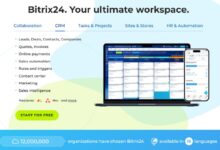
Bitrix24 is more than just a CRM—it’s an all-in-one workspace that includes project management, telephony, and collaboration tools. Its free plan supports up to 12 users, making it perfect for small teams.
Core CRM features include:
- Lead and deal tracking
- Visual sales funnel
- Email and telephony integration
- Task and calendar management
- Knowledge base and document storage
Paid plans start at $39/month for 24 users. While the interface can feel cluttered, its breadth of features justifies the learning curve. Explore Bitrix24 for more.
4. Freshsales (Now Freshworks CRM) – From $15/user/month
Freshsales, part of the Freshworks suite, is known for its intuitive interface and AI-driven insights. It’s especially popular among sales teams looking for smart automation.
The Growth plan ($15/user/month) offers:
- AI-based lead scoring
- Email tracking and sequences
- Phone and chat integration
- Visual deal pipeline
- Custom reports and dashboards
Freshsales also provides a free plan for up to 10 users with basic features. Its clean design and powerful automation make it a favorite for tech-savvy small businesses. Learn more at Freshworks CRM.
5. Agile CRM – $14.99/user/month
Agile CRM combines sales, marketing, and service tools in one platform. It’s a solid choice for businesses that want an all-in-one solution without paying for multiple tools.
Key features include:
- Integrated marketing automation (email campaigns)
- Web tracking and visitor identification
- Telephony and click-to-call
- Task and appointment scheduling
- Mobile CRM with GPS check-in
Agile CRM also offers a free plan for up to 10 users. However, some users report slower customer support. Still, for the price, it delivers impressive functionality. Visit Agile CRM for a demo.
6. Capsule CRM – From $18/user/month
Capsule CRM focuses on simplicity and ease of use. It’s ideal for service-based businesses like consultants, agencies, and freelancers who need a straightforward way to manage contacts and tasks.
Features include:
- Simple contact and organization management
- Task and sales pipeline tracking
- Integration with Gmail, Outlook, and Mailchimp
- Calendar sync and reminders
- Custom fields and tags
Capsule doesn’t offer a free plan, but it provides a 14-day free trial. Its clean interface and strong integrations make it a top pick for minimalists. Learn more at Capsule CRM.
7. Insightly – From $29/user/month
Insightly is a bit pricier but offers robust project and CRM integration. It’s perfect for businesses managing client projects alongside sales pipelines.
The Pro plan ($29/user/month) includes:
- Project and task management
- Workflow automation
- Customer lifecycle tracking
- Advanced reporting
- API access for custom integrations
Insightly also offers a free plan for up to two users. While not the cheapest, its project-CRM fusion adds unique value. Explore Insightly for project-driven teams.
Key Features to Look for in a Low Cost CRM
Not all Low Cost CRM platforms are created equal. Some cut corners on essential features to keep prices low. To ensure you’re getting real value, focus on these must-have capabilities.
1. Contact and Lead Management
The foundation of any CRM is its ability to store, organize, and track customer data. A good Low Cost CRM should allow you to:
- Import contacts from email, spreadsheets, or social media
- Segment contacts by tags, status, or custom fields
- Track communication history (emails, calls, notes)
- Duplicate contact merging to avoid clutter
Without solid contact management, your CRM becomes a digital graveyard of outdated information.
2. Sales Pipeline and Deal Tracking
A visual sales pipeline helps your team understand where each lead stands. Look for:
- Drag-and-drop deal stages
- Deal value and probability tracking
- Forecasting tools (even basic ones)
- Automated stage progression based on activity
According to Salesforce, teams using pipeline tracking close 28% more deals on average.
3. Automation and Workflow Tools
Automation is what turns a static database into a dynamic sales engine. Essential automations include:
- Follow-up email sequences
- Task creation after calls or meetings
- Lead assignment based on rules
- Reminders for overdue deals or tasks
Even basic automation can save 5–10 hours per week for a small sales team.
“Automation isn’t about replacing people—it’s about freeing them to do higher-value work.” — David Liu, Marketing Technologist
How to Choose the Right Low Cost CRM for Your Business
Selecting the best Low Cost CRM isn’t just about picking the cheapest option. It’s about aligning the tool with your business goals, team size, and workflow. Follow this step-by-step guide to make a smart decision.
1. Define Your Business Needs
Start by asking:
- What are our primary goals? (e.g., increase sales, improve customer service, streamline marketing)
- How many users need access?
- What channels do we use to interact with customers? (email, phone, social media)
- Do we need project management or marketing automation?
Answering these questions helps narrow down platforms that offer relevant features.
2. Evaluate Integration Capabilities
Your CRM shouldn’t exist in isolation. It should connect with tools you already use, such as:
- Email clients (Gmail, Outlook)
- Calendar apps (Google Calendar, Outlook)
- Marketing tools (Mailchimp, ActiveCampaign)
- Phone systems (Zoom, RingCentral)
- E-commerce platforms (Shopify, WooCommerce)
Check each CRM’s integration marketplace. Platforms like HubSpot and Zoho offer hundreds of native and third-party integrations.
3. Test User Experience and Onboarding
A powerful CRM is useless if your team won’t use it. Prioritize platforms with:
- Intuitive dashboards
- Minimal learning curve
- Onboarding tutorials or setup wizards
- Responsive customer support
Take advantage of free trials. Involve your team in testing—real user feedback is invaluable.
Common Mistakes to Avoid When Using a Low Cost CRM
Even the best Low Cost CRM can fail if implemented poorly. Avoid these common pitfalls to maximize your ROI.
1. Poor Data Entry and Management
Garbage in, garbage out. If your team enters incomplete or inaccurate data, your CRM becomes unreliable. Enforce data hygiene with:
- Required fields for key information
- Regular audits and cleanup
- Training on proper data entry
- Using dropdowns and tags to standardize inputs
According to IBM, poor data quality costs businesses an average of $12.9 million annually.
2. Overcomplicating the System
Resist the urge to customize everything from day one. Start simple. Use default pipelines, basic fields, and essential automations. You can always add complexity later.
Over-customization leads to:
- Confusing interfaces
- Slower performance
- Higher training costs
- Difficulty migrating data later
3. Lack of Team Adoption
The most common reason CRM projects fail is low user adoption. To combat this:
- Involve your team in the selection process
- Provide hands-on training
- Highlight personal benefits (e.g., fewer missed calls, automated reminders)
- Appoint a CRM champion to encourage usage
Make CRM usage part of your daily routine, not an extra chore.
“A CRM only works if your team actually uses it. Culture matters more than code.” — Sarah Kim, Operations Director
How a Low Cost CRM Can Transform Small Business Sales
Don’t underestimate the impact of a well-implemented Low Cost CRM. It’s not just a database—it’s a strategic tool that can transform how you sell and serve customers.
1. Improve Lead Conversion Rates
With better tracking and follow-up, you can nurture leads more effectively. Automated email sequences, task reminders, and lead scoring help ensure no opportunity slips through the cracks.
For example, a small marketing agency using HubSpot CRM reported a 40% increase in lead conversion within three months of implementation.
2. Enhance Customer Retention
A Low Cost CRM helps you remember important details—birthdays, past purchases, preferences—making interactions more personal. This builds trust and loyalty.
Features like activity timelines and customer notes ensure every team member is informed, even during handoffs.
3. Enable Data-Driven Decision Making
Even basic reporting in a Low Cost CRM provides insights into:
- Sales cycle length
- Top-performing channels
- Customer acquisition costs
- Team performance metrics
These insights help you refine strategies and allocate resources more effectively.
Future Trends in Low Cost CRM Technology
The CRM landscape is evolving rapidly. As AI, automation, and mobile-first design advance, even low-cost platforms are gaining enterprise-grade capabilities.
1. AI-Powered Insights and Automation
AI is no longer exclusive to high-end CRMs. Platforms like Zoho and Freshsales now offer AI assistants that:
- Predict deal closure likelihood
- Suggest next-best actions
- Automate data entry from emails
- Summarize customer interactions
These tools help small teams compete with larger organizations by making smarter decisions faster.
2. Mobile-First and Offline Access
With remote work and field sales on the rise, mobile CRM access is critical. Modern Low Cost CRM platforms offer:
- Full-featured mobile apps
- Offline data entry and syncing
- GPS-based visit tracking
- Mobile calling and email
Bitrix24 and Zoho CRM lead in this area, allowing sales reps to update records from anywhere.
3. Vertical-Specific Solutions
Generic CRMs are being replaced by niche tools tailored to industries like real estate, healthcare, and legal services. These specialized Low Cost CRM platforms include pre-built templates, compliance features, and industry-specific workflows.
For example, Keap (formerly Infusionsoft) offers a powerful CRM for service-based small businesses with built-in appointment scheduling and payment processing.
What is a Low Cost CRM?
A Low Cost CRM is a customer relationship management system designed to be affordable and accessible, typically priced under $50 per user per month. It includes essential features like contact management, sales tracking, and email integration, making it ideal for small businesses and startups.
Is there a free Low Cost CRM that actually works?
Yes. HubSpot CRM offers a powerful free plan with unlimited users and contacts. It includes email tracking, deal pipelines, and live chat, making it one of the most capable free CRMs available.
Can a Low Cost CRM scale with my business?
Absolutely. Platforms like Zoho CRM, Freshsales, and Insightly are designed to grow with your business. They offer tiered pricing and advanced features in higher plans, allowing seamless upgrades as your needs evolve.
Do Low Cost CRM tools integrate with email and calendars?
Yes, most Low Cost CRM platforms integrate with Gmail, Outlook, Google Calendar, and other common tools. This ensures your team can manage customer interactions without switching apps.
How much should I expect to pay for a Low Cost CRM?
Most Low Cost CRM platforms range from $0 (free plans) to $30 per user per month. Some, like Bitrix24, offer free plans for small teams, while others like Insightly start around $29 for advanced features.
Choosing the right Low Cost CRM can be a game-changer for small businesses. From HubSpot’s free tier to Zoho’s scalable plans, there’s a solution for every budget and need. The key is to focus on essential features, ease of use, and long-term scalability. Avoid common mistakes like poor data management and low team adoption by investing in training and process design. As AI and mobile capabilities continue to advance, even affordable CRMs are becoming smarter and more powerful. By leveraging a Low Cost CRM effectively, you can boost sales, improve customer relationships, and make data-driven decisions—all without overspending.
Further Reading:
